When planning a move into independent or supported living, most conversations focus on the home itself: bedrooms, bathrooms, shared spaces. Location gets less attention than it deserves, and one factor in particular is easy to overlook until it becomes a daily frustration: how easy it actually is to get around from there.
This guide looks at why accessible public transport matters so much for genuine independence, and what to actually check before settling on a location. It is worth reading before signing a lease or agreeing to a home, not after.
Why Accessible Public Transport Matters for Independence
Accessible public transport is often the difference between relying on someone else’s schedule and simply going where you want, when you want. A person living within easy reach of a reliable, accessible route can get to work, appointments, or a friend’s place without needing to arrange a lift or wait on a support worker’s availability, which adds up to a meaningfully different daily experience over time.
This matters for genuine choice and control, not just convenience. Independence is rarely just about managing tasks inside the home; it is also about being able to leave it on your own terms, whether that means popping to the shops, catching up with friends, or getting to work without needing to plan days in advance.
The flip side is also true. Living somewhere with poor transport access can quietly limit someone’s world, even when every other part of their support is working well, simply because getting anywhere feels like a production every single time.
Transport and Independence for Disability: What Good Access Looks Like
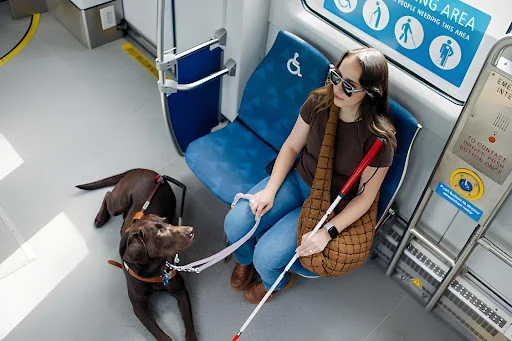
Transport and independence for disability go hand in hand, and good access has some fairly specific features. In Melbourne, this includes low-floor trams and buses, level-access stops, and stations with ramps or clear wheelchair symbols marking accessible boarding points.
The PTV Journey Planner lets you filter for accessible services and stops specifically, which is worth doing before assuming a nearby stop or route will actually work. Reliable transport support can also fill gaps where the public network alone does not quite get someone all the way to where they need to be.
A Companion Card is also worth knowing about, since it allows a support person to travel free alongside someone who needs assistance, which can make occasional trips together far less of a financial consideration.
Getting Around With a Disability: Common Barriers
Getting around with a disability is not always as simple as living near a train station or tram stop. Not every tram on every route is low-floor, and not every stop offers level access, so a route that looks convenient on a map can still be genuinely difficult in practice.
Frequency matters too. A stop with an accessible service running once an hour is a very different proposition to one with services every ten minutes, particularly for appointments or work with a fixed start time. It is worth actually testing a route at the times you would realistically use it, rather than assuming a timetable tells the whole story, since real-world reliability and weekend or evening frequency often differ from what a schedule suggests on paper.
Choosing a Location for Independent Living: What to Look For
Choosing a location for independent living means looking well beyond the home itself. Proximity to a genuinely accessible stop, not just the nearest one, should factor heavily into any decision, alongside how close the essentials are: a supermarket, a pharmacy, and a GP.
Our Supported Independent Living team factors transport access into how we think about home locations, since a beautifully set-up home is worth far less if getting out of it regularly is genuinely hard.
Community Access and Transport: Why They Go Together
Community access and transport are really two sides of the same coin. Reliable transport access is often what determines whether community participation goals in an NDIS plan translate into an actual regular routine, rather than staying an occasional, harder-to-arrange outing.
Our community access support works alongside this, helping participants build the confidence and routine to use transport independently over time, rather than needing a support worker present indefinitely. For some participants, this might mean practising a specific route repeatedly until it becomes second nature, rather than relying on support for every single trip indefinitely.
Finding the Right Support and Location
Choosing the right place to live involves more than finding suitable accommodation. It’s also important to consider how easily you can access public transport, healthcare, shops, community services, and the places you visit most often. A location that supports your daily routine can make it easier to maintain your independence and participate in the community.
If you’re unsure where to start, an experienced Supported Independent Living (SIL) provider can help you compare different areas and identify locations that best suit your support needs, lifestyle, and long-term goals. They can also explain practical factors such as transport options, nearby amenities, and how accessible the local community is.
Before making a decision, it’s a good idea to visit the property in person. Exploring the neighbourhood, checking nearby services, and experiencing the area at the times you would normally travel can give you a much clearer understanding of whether the location is the right fit for your everyday life.
How Helping Haven Can Help
At Helping Haven, we factor transport and location into how we support participants from day one, whether that means transport assistance, community access support, or helping think through a supported independent living location that genuinely suits how someone wants to live day to day.
If you would like to talk through transport or location as part of your own plan, get in touch with our team today.